
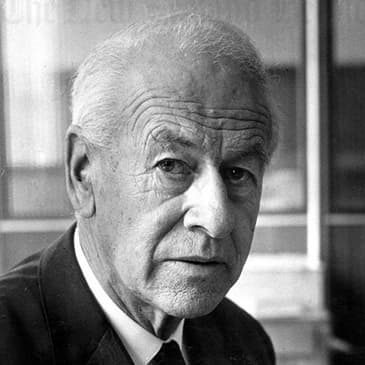
[00:00:00] Hello listeners, welcome to my podcast. We will continue from yesterday, an introduction and commentary by E.M Blaiklock. Acts 12 verses 1-19 Jerusalem again. Herod. Agrippa I, grandson of Herod called the Great, had grown up in imperial circles in Rome.
[00:00:26] He was a friend of the third emperor, the mad Caligula, and had contrived to aid Caligula's successor Claudius in the vital matter of his elevation to the Principate. Hence the addition of Judea and Samaria to the territory which Caligula had granted him.
[00:00:46] This was the tetrapi of Philip, Luke 3 verse 1, later extended by the further assignment of Galilee and Perea, the old domain of Herod Antipas. The title of King accompanied Caligula's appointment. Notorious in Rome for his prodigality and extravagance, in Judea Herod posed as a champion of the law.
[00:01:12] The attack on the church was no doubt a policy move to gratify and conciliate the old Pharisaic and Sadducean enemies of the church. The persecution, therefore, and the imprisonment of Peter recorded in this chapter, follow in direct sequence the events narrated in Acts 10 verse 1 through to Acts 11 verse 18.
[00:01:39] The zealous observance, which had heretofore marked the Jerusalem church, had gone far to allay the fears of the religious leaders. Provided Christianity remained within the strict Jewish fold and confined its activities to the framework of the old faith, the Sadducees had no fault to find with it, and the Pharisees found no cause for complaint.
[00:02:03] But Peter's report caused alarm which spread beyond the confines of the church. Vested interest took fright, and, either directly persuaded or sensing an opportunity, the king started his petty persecution. The narrative of Peter's imprisonment and deliverance bears all the freshness and vividness of a first-hand account.
[00:02:28] Peter himself, and John Mark, in whose mother's house, verse 12, the very human little drama of verses 13 to 16 was enacted, were close enough to the story of this book and to its writer. Where Peter hid is not known. There seems to be no evidence for a retreat to Rome, and Luke had his own reasons for the lack of detail.
[00:02:55] He is preparing to usher Peter from the stage as Paul steps to the forefront. The apostle to the Jews has played his part. He has, in fact, prepared his way for the apostle to the Gentiles, and it was not within Luke's present plan to say more of him.
[00:03:13] It is the world's loss that he did not write a third account for his friend Theophilus, continuing the unfinished narrative of Acts, and recounting other apostolic ministries. G. Caesarea again. Acts 12, verses 20-25. It is appropriate that the chapter should end with the story of the death of the persecutor.
[00:03:40] Josephus, who looked with favour on Herod, gives a much longer account of his passing. It was a case of what the Greeks would have called hybris, that fatal sin of the spirit whereby man, lifting himself beyond man's allotted elevation, invites and calls down the judgment of heaven. The Greeks would have agreed wholeheartedly with Luke that Herod died for this species of blasphemy.
[00:04:08] For those who are curious about the natural mechanism of the judgment which fell upon the king, Dr. A. Rendell Short has a convincing diagnosis, rather more gruesome in its patient detail than the briefer account given in verse 23 by his fellow doctor, Luke. Additional notes. Acts 9, verse 35. Calvin has a sensible note on this verse.
[00:04:36] When the scripture saith, All, it doth not comprehend every one, however so many it noteth. But it putteth all for the more part, or for many, or for the common sort of men.
[00:04:49] For language similarly eastern in its hyperbole, compare Genesis 41, verse 54, Job 37, verse 3, Deuteronomy, chapter 2, verse 25, Luke, chapter 2, verse 1, Acts, chapter 2, verse 25, and Romans 1, verse 8, etc. Acts 10, verse 1.
[00:05:15] An inscription from Austria dated AD 69 contains the abbreviated words O-P-T-C-O-H-I-I-I-T-A-L, C-R-F-T-I-N-I-E-X-V-E-X-I-I-S-A-G-I-T-E-X-E-R-S-Y-R, i.e.
[00:05:42] adjutant of the second Italian cohort of division of the army of Syria. Roman citizens of the century of Faustinus from the archery division of the army of Syria. Acts 10, verse 28. The word translated of another nation is used nowhere else in the New Testament. It marks Peter's tact. There no suggestion of inferiority which other words for Gentiles might have contained.
[00:06:12] Tomorrow, we will go on from Acts 10 this 33 time at the top of page 101. Thank you for listening to my podcast and commentary on the book of Acts. Is Professor E. M. Blaiklock signing off for today?